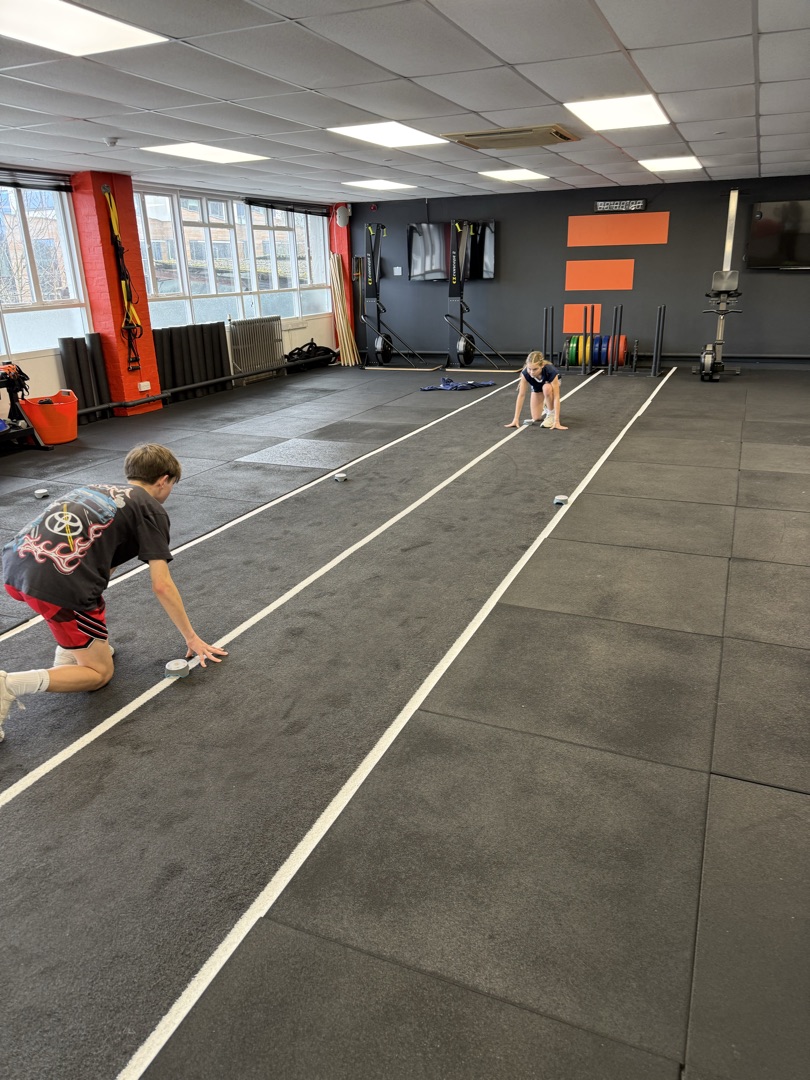
“You can’t coach speed” is one of the most damaging ideas in youth sport — because it’s wrong. While genetics set a ceiling, the vast majority of young athletes are nowhere near theirs. Speed, acceleration and agility are trainable qualities, and the teenage years are a prime window to develop them.
Speed and agility are different things
Linear speed — sprinting in a straight line — depends on producing large forces into the ground quickly and on clean sprint mechanics. Agility is the ability to decelerate, change direction and re-accelerate, often in response to a stimulus like an opponent or a ball. A genuinely quick athlete needs both, and they’re trained differently.
How we coach it
We start with mechanics: posture, arm action, and powerful, well-timed ground contacts. From there we layer in acceleration drills over short distances, where most sporting sprints actually happen. For agility, we use change-of-direction patterns and reactive drills — cones, mirror drills and small-sided games — so athletes learn to brake, plant and explode out of a cut without losing balance.
Strength underpins everything
Speed and agility don’t exist in isolation. The ability to absorb and produce force — built in the gym through squats, hinges, jumps and landings — is what lets an athlete decelerate safely and accelerate sharply. That’s why our speed work always sits alongside an appropriate strength foundation. Train both, coach the detail, and quickness improves measurably — we track it on the sprint gates to prove it.